


Academic integrity is a widely discussed topic in modern education. With unlimited access to online resources, essay databases, and AI-powered writing tools, students today rely on a broader range of digital resources when preparing academic assignments. As a result, plagiarism is widely recognized as a common form of academic misconduct in schools and universities across the United States.
But how widespread is plagiarism among students? Research suggests the problem is far from rare. Surveys conducted by academic integrity organizations, universities, and plagiarism-detection platforms reveal that a significant share of students report copying text, paraphrasing sources without citation, or submitting assignments containing unattributed material. At the same time, institutions are increasingly relying on detection tools and stricter academic policies to address the issue.
In this article, we analyze the percentage of students who plagiarize in the U.S., using data from academic studies, plagiarism detection systems, and educational surveys. The statistics below explore how plagiarism rates have changed over time, how they differ across education levels, and how new technologies, especially generative AI, are influencing student writing behavior.
Understanding these numbers provides valuable insight into the scale of academic misconduct and the challenges educators face in maintaining originality in student work.
To better understand the scale of the issue, it is useful to examine how the percentage of students who plagiarise in the U.S. by year has changed over time.
Percentage of students who plagiarize in the U.S. by year
The chart below presents the percentage of students who plagiarise in the U.S. by year, based on a statistical report by PlagiarismSearch. This dataset contributes to a broader percentage of students who plagiarise in the U.S. statistics and illustrates how the plagiarism rate among students in the U.S. has evolved across recent years. Examining the percentage of students who plagiarise in the U.S. by year since 2018 helps identify changes in plagiarism trends.
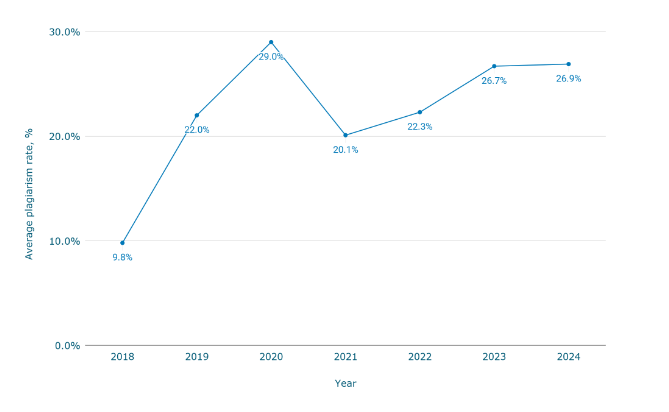
- The percentage of students who plagiarise in the U.S. in 2019 increased to 22.0%, more than doubling from 9.8% in 2018.
- The percentage of students who plagiarise in the U.S. statistics for 2020 reached the highest level in the dataset at 29.0%.
- By 2024, the plagiarism rate among students in the U.S. stabilized at 26.9%, following several fluctuations after the 2020 peak.
Trends in the percentage of students who plagiarize in the U.S. over time
Overall, the percentage of students who plagiarise in the U.S. statistics indicates that plagiarism levels have varied across recent years but remain consistently significant. These figures show that the plagiarism rate among students in the U.S. increased sharply between 2018 and 2020 and remained above 20% in subsequent years. The data provides additional context and helps clarify the percentage of students who have plagiarized in recent academic environments.
After reviewing how the percentage of students who plagiarise in the U.S. by year changes over time, it is useful to examine several key indicators that illustrate the overall plagiarism rate among students in the U.S.
Percentage of students who plagiarise in the U.S.: Key indicators
The chart below summarizes several indicators that help explain the percentage of students who plagiarize in the U.S. according to multiple academic studies and plagiarism detection data. These figures contribute to a broader percentage of students who plagiarise in the U.S. statistics and provide additional context on what percentage of students have plagiarized in academic work. Together, these metrics illustrate different ways researchers measure the plagiarism rate among students in the U.S.
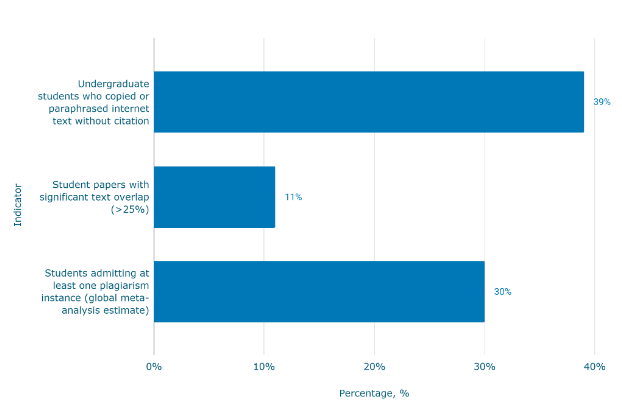
- Surveys indicate that 39% of undergraduate students reported copying or paraphrasing internet text without citation.
- Analysis of student submissions shows that 11% of student papers contain significant text overlap exceeding 25% similarity.
- A global meta-analysis estimates that 30% of students admit to at least one instance of plagiarism during their studies.
These statistics indicate that plagiarism appears in several measurable forms, including self-reported behavior and detected similarity in student papers. The data also provides additional insight by showing that a substantial share of students who plagiarize acknowledge copying content without proper citation. Overall, these findings help clarify the percentage of college students who plagiarize and contribute to a broader understanding of academic integrity trends.
Beyond overall indicators of the percentage of students who plagiarise in the U.S., it is also useful to examine how plagiarism behavior differs across education levels.
Plagiarism rate among students in the U.S. by education level
The chart below presents the plagiarism rate among students in the U.S. across several education levels. These figures contribute to broader plagiarism statistics and help explain what percentage of students have plagiarized in different academic settings. Comparing these groups provides additional facts about plagiarism and shows how the prevalence of students who plagiarize varies depending on the level of education.
Plagiarism Among Students by Academic Level
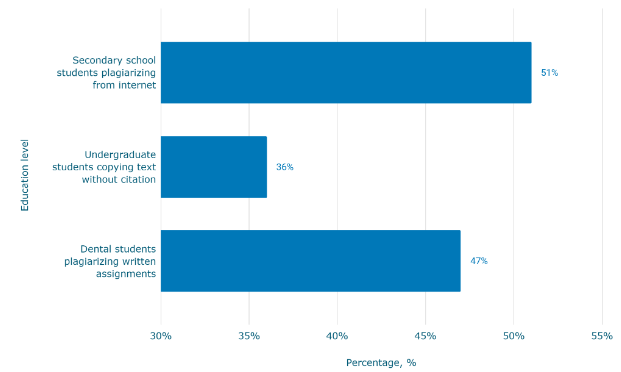
- Surveys indicate that 51% of secondary school students reported plagiarizing content from the internet.
- Among undergraduates, 36% of students admitted to copying text verbatim without proper citation (verbatim copying only; a broader measure including paraphrasing puts this figure at 39%).
- In professional education programs, 47% of dental students reported plagiarizing written assignments.
What percentage of students have plagiarized at different education levels
These plagiarism statistics show that plagiarism occurs across multiple levels of education, from secondary school to specialized university programs. The data also shows that younger students and professional program participants report relatively high rates of plagiarism behavior. Overall, these findings illustrate how the plagiarism rate among students in the U.S. can vary depending on educational context.
While previous charts examined the percentage of students who plagiarize in the U.S. in specific contexts, different research methodologies often produce varying estimates of the plagiarism rate among students in the U.S.
Plagiarism rate among students in the U.S.: Estimates from major studies
The chart below compares several widely cited plagiarism statistics reported by academic surveys, meta-analyses, and plagiarism detection systems. These estimates provide additional context for understanding what percentage of students have plagiarized and how different research approaches measure the plagiarism rate among students in the U.S. It is important to note that the ICAI estimate includes broader cheating and plagiarism behaviors rather than plagiarism alone.
Plagiarism Estimates from Major Studies
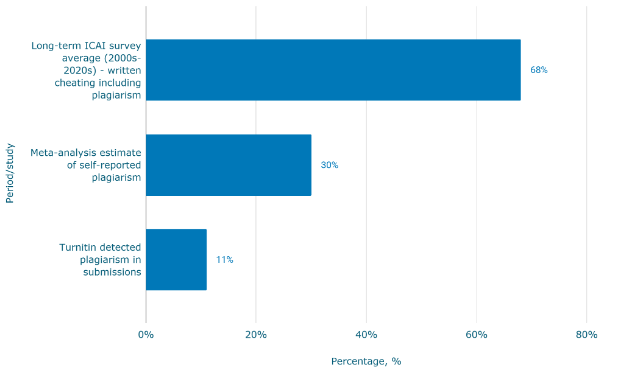
- The long-term ICAI survey reports that 68% of students admitted to written cheating behaviors, which include cheating and plagiarism.
- A meta-analysis of multiple studies estimates that 30% of students admit to at least one instance of plagiarism.
- Detection data indicate that 11% of student submissions contain significant unattributed text overlap.
Plagiarism statistics from academic surveys and detection systems
These plagiarism statistics demonstrate that the reported prevalence of plagiarism varies depending on the measurement method used. Self-reported surveys tend to produce higher estimates than plagiarism detection systems, while broader academic integrity studies may include both cheating and plagiarism behaviors. Together, these findings provide a more complete understanding of plagiarism rates among students in the U.S. and help clarify the percentage of college students who plagiarize in academic settings.
In addition to traditional forms of academic misconduct, recent plagiarism statistics also examine how internet resources and AI tools influence the plagiarism rate among students in the U.S.
Internet and AI-Related plagiarism among students
The chart below summarizes several indicators related to AI use and internet-based writing tools in academic work. These figures provide additional facts about plagiarism and help explain how digital technologies influence the behavior of students who plagiarize. In particular, the data highlights the percentage of students using AI tools and other digital writing technologies that may contribute to new forms of plagiarism.
Internet and AI-Related Plagiarism Among Students
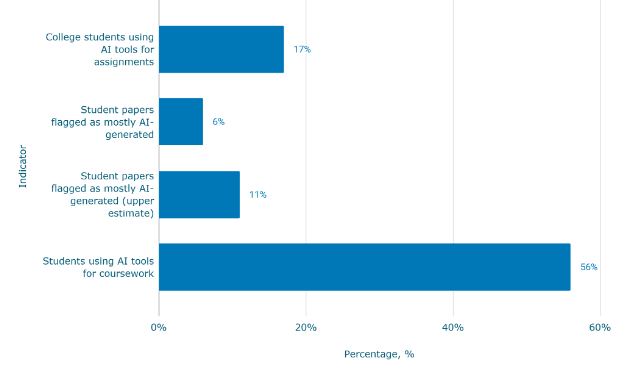
- Surveys indicate that 17% of college students reported using AI tools for assignments.
- Detection systems estimate that 6% to 11% of student papers contain mostly AI-generated text.
- A broader survey found that 56% of students reported using AI tools for coursework.
Percent of students using AI tools in academic work
These statistics show that AI tools and internet-based resources have become common in academic work. The data indicates that a notable share of students who plagiarize may rely on AI-generated or internet-assisted content. As a result, the influence of AI tools is increasingly relevant when evaluating the plagiarism rate among students in the U.S. and interpreting modern facts about plagiarism in education.
While the previous chart examined the presence of AI-generated content in student work, it is also important to look at how frequently students use AI tools during the writing process.
AI tools and academic writing practices among students
The chart below summarizes several AI-related writing practices reported by students. These figures provide additional plagiarism statistics and help explain how AI tools influence the behavior of students who plagiarize. The data also highlights the percentage of students using AI tools and other digital tools that can affect academic writing practices.
AI Tools and Academic Writing Practices
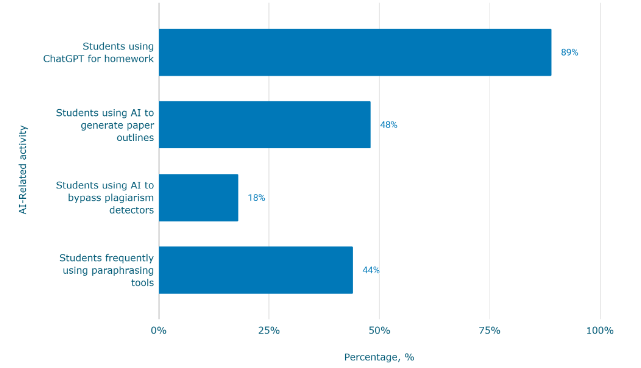
- Surveys indicate that 89% of students reported using ChatGPT for homework.
- About 48% of students use AI tools to generate outlines for academic papers.
- Approximately 18% of students reported using AI tools specifically to bypass plagiarism detectors.
Percent of students using ChatGPT and other AI tools for academic work
These statistics illustrate how AI tools have become integrated into student writing workflows. The data provides additional facts about plagiarism, showing that AI-assisted writing, paraphrasing tools, and automated content generation are commonly used during assignment preparation. Together, these findings help explain how modern technologies influence academic writing and the broader plagiarism rate among students in the U.S.
After examining how AI tools influence student writing practices, it is also useful to analyze how the plagiarism rate among students in the U.S. varies across different types of educational institutions.
Plagiarism rate among students in the U.S. by institution type
The chart below compares the plagiarism rate among students in the U.S. across several institution types. These plagiarism statistics provide additional context for understanding the percentage of college students who plagiarize in different academic environments. Examining institutional differences also contributes to broader facts about plagiarism in higher education.
Plagiarism Rates by Institution Type
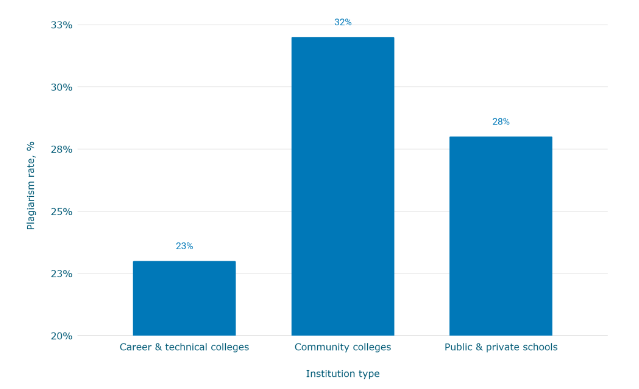
- Community colleges show the highest plagiarism rate, with 32% of students involved in plagiarism-related activity.
- Public and private schools report a plagiarism rate of 28%, slightly lower than that of community colleges.
- Career and technical colleges record the lowest level in this dataset, with 23% of students involved in plagiarism.
Plagiarism statistics across different types of educational institutions
These figures suggest that plagiarism rates among students in the U.S. vary depending on the institutional setting. The data indicate that plagiarism levels are relatively high across multiple education sectors. Overall, these findings contribute to broader interesting facts about plagiarism and help explain the percentage of college students who plagiarize in different types of academic institutions.
After examining institutional differences in the plagiarism rate among students in the U.S., it is useful to compare these findings with plagiarism statistics reported in other countries.
Global comparison of student plagiarism rates
The chart below compares plagiarism statistics across several countries and includes the percentage of students who plagiarise in the U.S. alongside international estimates. These figures provide additional facts about plagiarism and help place the plagiarism rate among students in the U.S. in a broader global context. The dataset also shows how levels of AI-generated academic content vary between countries.
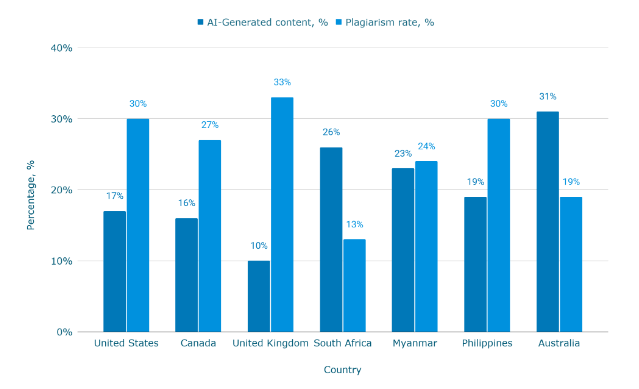
- The percentage of students who plagiarise in the U.S. is estimated at 30%, while 17% of academic content is reported as AI-generated.
- The United Kingdom reports the highest plagiarism rate in the dataset at 33%, despite only 10% AI-generated content.
- South Africa shows the lowest plagiarism rate at 13%, even though 26% of academic content is AI-generated.
Plagiarism statistics across countries
These plagiarism statistics demonstrate that plagiarism rates vary significantly across countries. The data also provides additional interesting facts about plagiarism, showing that higher levels of AI-generated content do not necessarily correspond to higher plagiarism rates. Overall, the comparison highlights how the plagiarism rate among students in the U.S. fits within broader international facts about plagiarism and contributes to understanding the percentage of students who have plagiarized in different academic systems.
Conclusions
- The available data indicate that plagiarism remains a persistent issue within the U.S. education system. The percentage of students who plagiarize in the U.S. increased from 9.8% in 2018 to a peak of 29.0% in 2020, before stabilizing at 26.9% in 2024, suggesting that plagiarism rates have remained above 20% in recent years.
- Survey indicators show that plagiarism appears in several measurable forms. Approximately 39% of undergraduate students report copying or paraphrasing internet sources without citation, while plagiarism detection systems estimate that 11% of student papers contain more than 25% unattributed text overlap, and 30% of students admit to at least one instance of plagiarism during their studies.
- Data indicate that 51% of secondary school students report plagiarizing internet content, compared with 36% of undergraduate students copying text verbatim without citation and 47% of dental students plagiarizing written assignments.
- Technological changes are influencing academic writing practices. Surveys indicate that 17% of college students use AI tools for assignments, 56% report using AI tools for coursework, and 6-11% of student papers contain predominantly AI-generated content, reflecting the growing role of digital tools in academic work.
- Institutional and international comparisons show variation in plagiarism rates across contexts. Plagiarism rates reach 32% in community colleges, compared with 28% in public and private schools and 23% in career and technical colleges, while global comparisons show rates ranging from 13% in South Africa to 33% in the United Kingdom, with the United States reporting approximately 30%.
Sources
- AI Plagiarism Statistics 2025: Transforming Academic Integrity. 23 Feb. 2025, https://artsmart.ai/blog/ai-plagiarism-statistics/. Accessed 10 March 2026.
- “Plagiarism Statistics – Academic Research Guide Association.” Sustainable Development Goals 2030 Sustainable Development Goals 2030, https://argassociation.org/plagiarism-statistics/. Accessed 10 March 2026.
- “Plagiarism Statistics 2025: Facts, Trends, and Research Data.” Plagiarism Detector, 15 Feb. 2025, https://plagiarism-detector.com/en/plagiarism-statistics. Accessed 10 March 2026.
- “Plagiarism Statistics: Market Data Report 2026.” Gitnux, https://gitnux.org/plagiarism-statistics/. Accessed 10 March 2026.
- https://plagiarismsearch.com/files/uploads/plagiarism-trends-by-country-2018-2024.pdf. Accessed 10 March 2026.